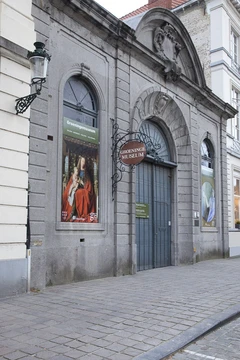
Johannes Ockeghem
Franco-Flemish composer and singer of early Renaissance music.

Cantakukuruz · CC BY-SA 4.0
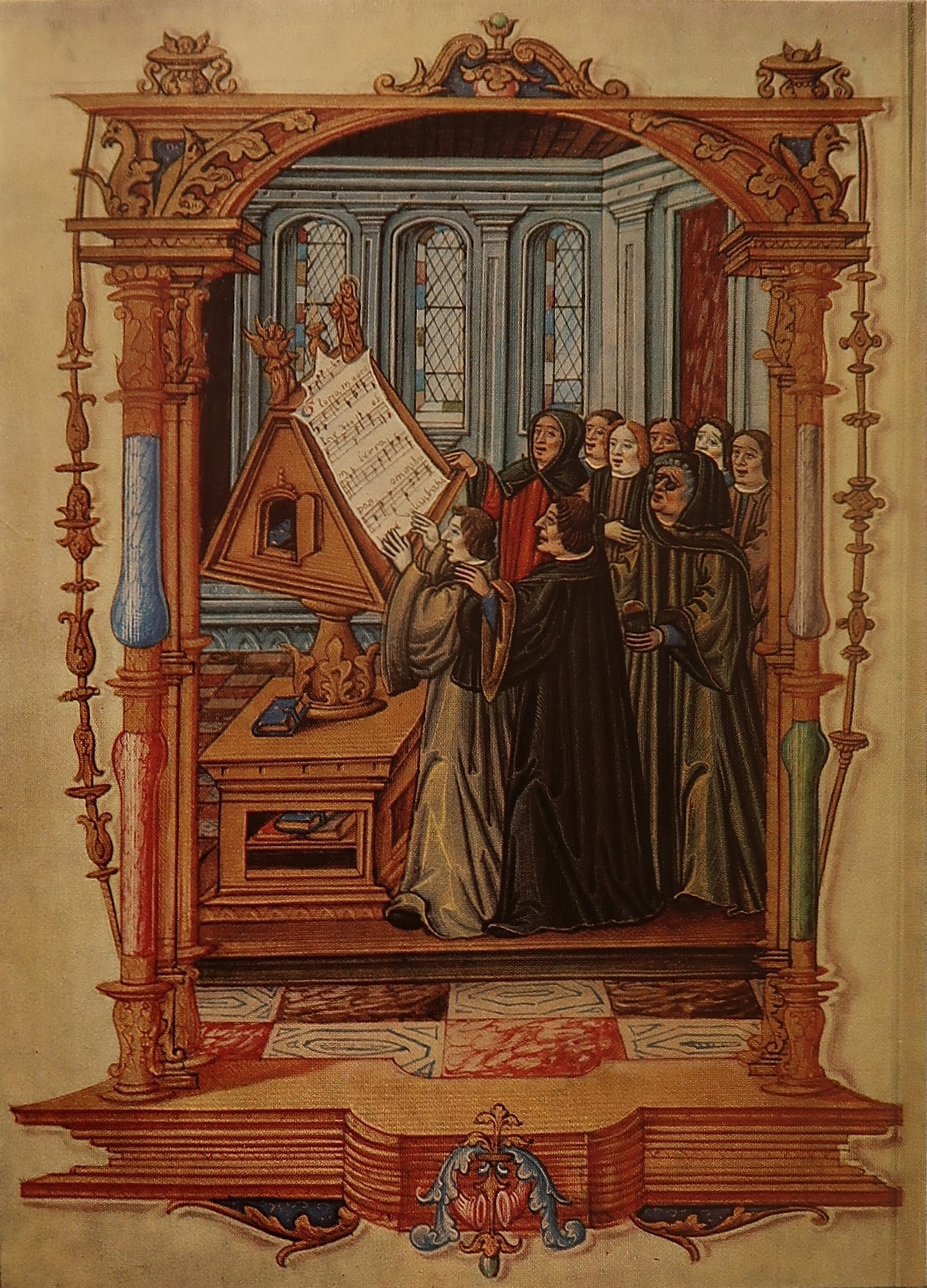
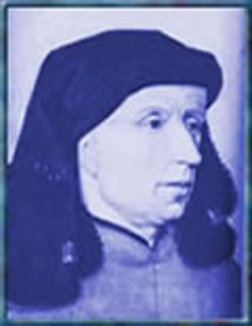
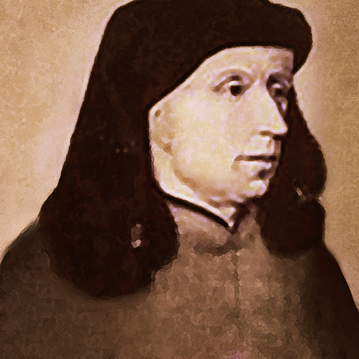
Johannes Ockeghem (c. 1410 – 6 February 1497) was a Franco-Flemish composer and singer of early Renaissance music. He was the leading European composer in the period between Guillaume Du Fay and Josquin des Prez, and—with his colleague Antoine Busnois—a prominent European composer in the second half of the 15th century. He was an important proponent of the early Franco-Flemish School. Ockeghem spent most of his career serving the French royal court under Charles VII, Louis XI and Charles VIII. Numerous poets and musicians lamented his death, including Erasmus, Guillaume Crétin, Jean Molinet and Josquin, who composed the well-known Nymphes des bois for him.
- born
- c. 1410 (disputed; possibly as late as 1430), Saint-Ghislain, Burgundian Netherl
- died
- 6 February 1497, probably Tours
- field
- Composer and singer
- nationality
- Franco-Flemish
- known_for
- Leading composer between Du Fay and Josquin; earliest surviving polyphonic Requi
Lore & Background
Ockeghem is believed to have been born in the Walloon city Saint-Ghislain, Burgundian Netherlands (now Belgium). His birthdate is unknown; dates as early as 1410 and as late as 1430 have been proposed. The first actual documented record of Ockeghem is from the Onze-Lieve-Vrouwe cathedral in Antwerp, where he was employed in June 1443 as a 'left-hand choir singer'. He probably studied with Gilles Binchois, and at least was closely associated with him at the Burgundian court. Between 1446 and 1448 Ockeghem served at the court of Charles I, Duke of Bourbon in Moulins, now in central France. Around 1452 he moved to Paris where he served as maestro di cappella to the French court, as well as treasurer of the collegiate church of St. Martin, at Tours. In addition to serving the French court under Charles VII, Louis XI and Charles VIII, he held posts at Notre Dame de Paris and at St. Benoît. He is known to have travelled to Spain in 1470, as part of a diplomatic mission for the King. After the death of Louis XI (1483), not much is known for certain about Ockeghem's whereabouts, though it is known that he went to Bruges and Tours, and he probably died in the latter town since he left a will there.
Reader's Guide
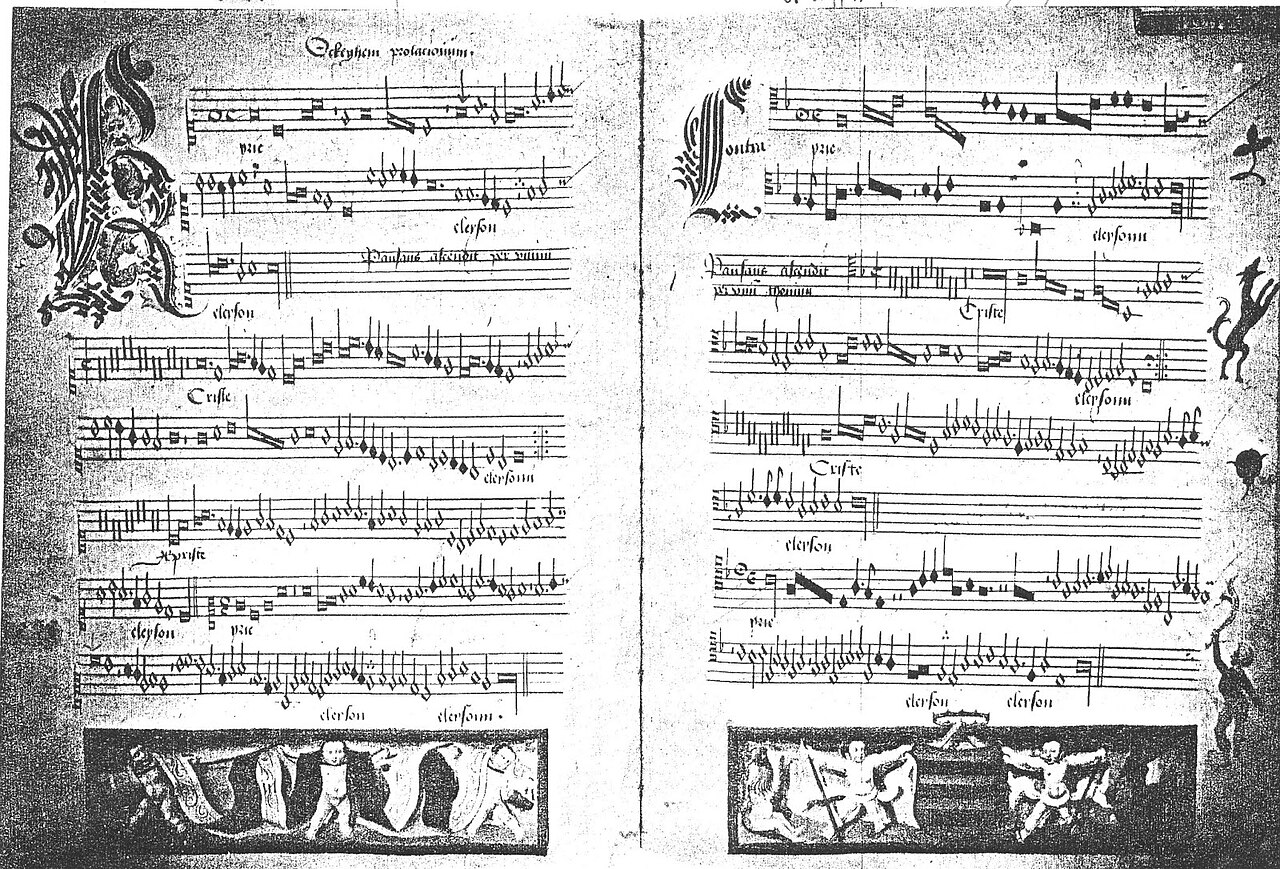
Ockeghem's extant works represent only a small part of his entire oeuvre, including around 14 masses, 20 chansons and fewer than 10 motets—though the exact numbers vary due to attribution uncertainties. His better-known works include the canon-based Missa prolationum; the Missa cuiusvis toni, which can be sung in any mode; the chanson Fors seulement; and the earliest surviving polyphonic Requiem (Missa pro Defunctis). Thirteen of Ockeghem's masses are preserved in the Chigi codex, a Flemish manuscript dating to around 1500. He used the cantus firmus technique in about half of his masses; three of his masses—Missa Ma maistresse, Missa Fors seulement, and Missa Mi-mi—are based on chansons he wrote himself, foreshadowing the parody mass techniques of the 16th century. Ockeghem influenced Josquin des Prez and the subsequent generation of Netherlandish composers; he was known throughout Europe for his expressive music and his technical skill. Two of the most notable contrapuntal achievements of the 15th century include his Missa prolationum, which consists entirely of mensuration canons, and the Missa cuiusvis toni, designed to be performed in any of the different modes.
Did You Know?
- The spelling 'Ockeghem' comes from a supposed autograph that survived until 1885 and was reproduced by historian Eugène Giraudet; the document has since been lost.
- In 1993, documents dating from 1607 were found stating that 'Jan Hocquegam' was a native of Saint-Ghislain in the County of Hainaut.
- Ockeghem's Missa pro Defunctis is the earliest surviving polyphonic Requiem mass; an earlier setting by Dufay has been lost.
- Some of Ockeghem's works were included in Petrucci's Harmonice musices odhecaton (1501), the first collection of music published using moveable type.
- The poet Guillaume Crétin wrote in his lament on Ockeghem's death that 'it was a great shame that a composer of his talents should die before 100 years old'.
A Life in Royal Service
Ockeghem's professional life was defined by sustained service to the French monarchy. After an early stint at the court of Charles I, Duke of Bourbon in Moulins between 1446 and 1448—where he became the first singing chaplain to be recorded in the court's official documents—he relocated to Paris around 1452. There he assumed the role of maestro di cappella to the French court while simultaneously holding the treasurership of the collegiate church of St. Martin in Tours. His court obligations spanned the reigns of Charles VII, Louis XI, and Charles VIII, and he also maintained positions at Notre Dame de Paris and the church of St. Benoît. His duties occasionally extended beyond music: in 1470 he accompanied a diplomatic mission to Spain tasked with discouraging a Franco-English-Burgundian alliance and negotiating a marriage between Isabella I of Castile and Louis XI's brother, Charles, Duke of Guyenne. After Louis XI died in 1483, the documentary trail thins considerably. Ockeghem is known to have visited Bruges and Tours, and he almost certainly died in the latter city, where he left his will.
A Compact but Groundbreaking Catalogue
The surviving body of Ockeghem's music is modest in volume yet remarkable in ambition. Scholars estimate roughly fourteen masses, twenty chansons, and fewer than ten motets, though attribution questions keep shifting those totals. What makes the catalogue extraordinary is the range of intellectual daring within it. The Missa prolationum is built on a rigorous canonic structure, while the Missa cuiusvis toni was designed so that it could be performed in any of the church modes—a flexibility unheard of in mass composition at the time. Among his secular works, the chanson Fors seulement stands out as a lyrical gem. Perhaps most striking is that Ockeghem's name is attached to the earliest surviving polyphonic Requiem Mass, a work that would have been a major liturgical undertaking. Yet this output represents only a fraction of what he actually composed; a significant portion of his music has been lost, and many pieces once credited to him have since been reassigned to other hands. For a composer whose reputation spanned nearly half a century, the surviving corpus is both a treasure and a reminder of how much has slipped beyond recovery.
Bridge Between Generations
Ockeghem occupies a pivotal position in the genealogy of fifteenth-century European music. He is widely regarded as the leading composer of the interval between Guillaume Dufay and Josquin des Prez, and alongside Antoine Busnois he defined the musical landscape of the latter half of the century. Contemporary writers habitually grouped Dufay, Busnois, and Ockeghem together, and Ockeghem was almost certainly a student or close associate of Gilles Binchois at the Burgundian court. Yet his compositional language departed noticeably from that older generation's idiom. In doing so, he functioned as a direct conduit from the Burgundian style to the next wave of Netherlandish masters, including Jacob Obrecht and Josquin. His earliest documented appearance, in June 1443 at the Onze-Lieve-Vrouwe cathedral in Antwerp, placed him in a distinguished musical establishment where he likely absorbed the English compositional style under the direction of Johannes Pullois. This early exposure to continental and English practices, combined with his training in the Burgundian tradition, gave him a uniquely syncretic palette that would shape the Franco-Flemish School for decades to come.
A Death That Stopped the Musical World
When Ockeghem died on 6 February 1497, the reaction across the European literary and musical world was immediate and overwhelming. Poets and composers from multiple countries poured out laments in his honor. Guillaume Crétin, Jean Molinet, and the humanist Desiderius Erasmus all composed verses mourning the loss, and Crétin's bitter remark that it was a great shame a man of such talent should die before reaching one hundred became one of the most quoted lines in the collection. The musical tributes were equally significant: Josquin des Prez set the famous Nymphes des bois, a piece that remains one of the most performed works of the entire fifteenth century, while Johannes Lupi contributed another polyphonic setting of the elegiac texts. The sheer number of independent laments—both poetic and musical—testifies to the depth of respect Ockeghem commanded among his peers. In an era when a composer's reputation was often known only within a single court or region, the fact that figures as diverse as a Flemish poet, a French humanist, and the most celebrated composer of the next generation all felt compelled to write in his memory speaks to the extraordinary breadth of his influence.
Gallery
Frequently Asked Questions
Who is Johannes Ockeghem?
He was a Franco-Flemish composer and singer active during the early Renaissance period. He is widely regarded as the foremost European composer working in the span between Guillaume Du Fay and Josquin des Prez.
What are Johannes Ockeghem's most famous works?
His best-known compositions include the Missa prolationum, the Missa cuiusvis toni, and what scholars consider the earliest surviving polyphonic setting of a Requiem Mass.
When and where was Johannes Ockeghem born?
He was born around 1410, though some researchers push the date as late as 1430, in Saint-Ghislain in the Burgundian Netherlands (present-day Belgium).
Why is Johannes Ockeghem important in music history?
He anchored the European compositional scene for a stretch between two giants, Du Fay and Josquin, and helped shape the early Franco-Flemish School alongside colleagues such as Antoine Busnois. His output bridged medieval and Renaissance stylistic approaches.
Where and when did Johannes Ockeghem die?
He passed away on 6 February 1497, most likely in Tours, France.
More in Renaissance And Baroque Masters 1-22
Spotted an error? Know more?
This is a living reference — every entry is fact-audited, and reader corrections feed straight into our audit queue. Suggest an edit · See this site's audit record