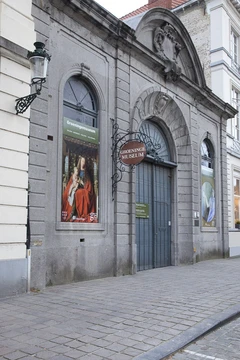
Matthias Grünewald

Txllxt TxllxT · CC BY-SA 4.0
Matthias Grünewald was a highly regarded painter from the German Renaissance. He is known for his religious works, and only ten paintings—including several polyptychs—and thirty-five drawings survive, all religious. He was obscure until the late nineteenth century, when many of his paintings were attributed to Albrecht Dürer, who is now seen as his stylistic antithesis.
- died
- 31 August 1528
Lore & Background
Grünewald was recognized in his lifetime, as shown by his commissions, yet the details of his life are unusually unclear for a painter of his significance at this date. The first source to sketch his biography comes from the German art historian Joachim von Sandrart, but his accounts are often unreliable. Afterward, he returned to Frankfurt, though there is no reliable evidence he purchased a house there. The circumstances of his departure from Isenheim and his payment for the altarpiece remain undocumented. Later, he entered the service of the von Erbach family, though the exact year and the detail about a child are not confirmed by established sources. There has been considerable uncertainty about the details of his life.
Reader's Guide
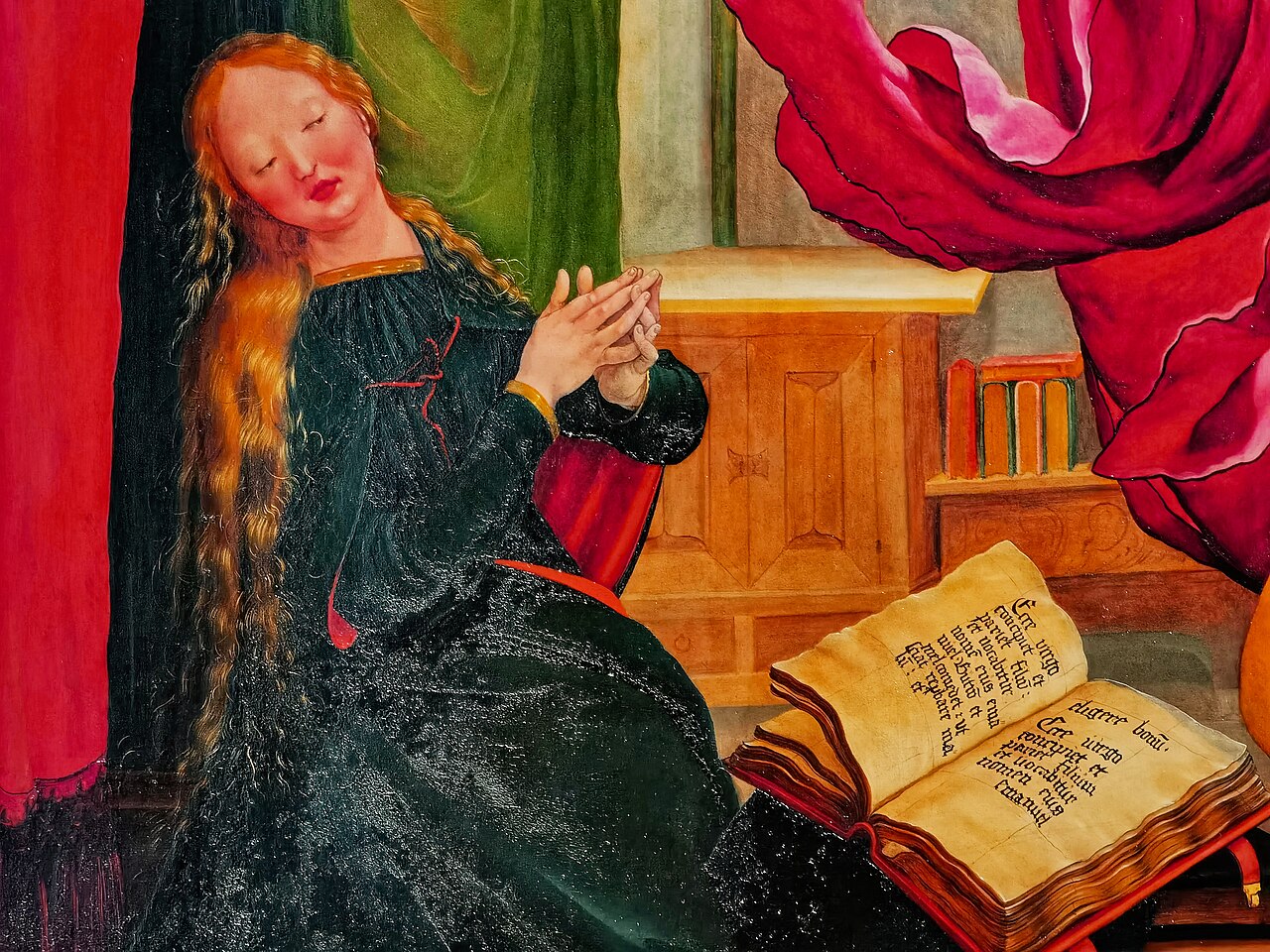
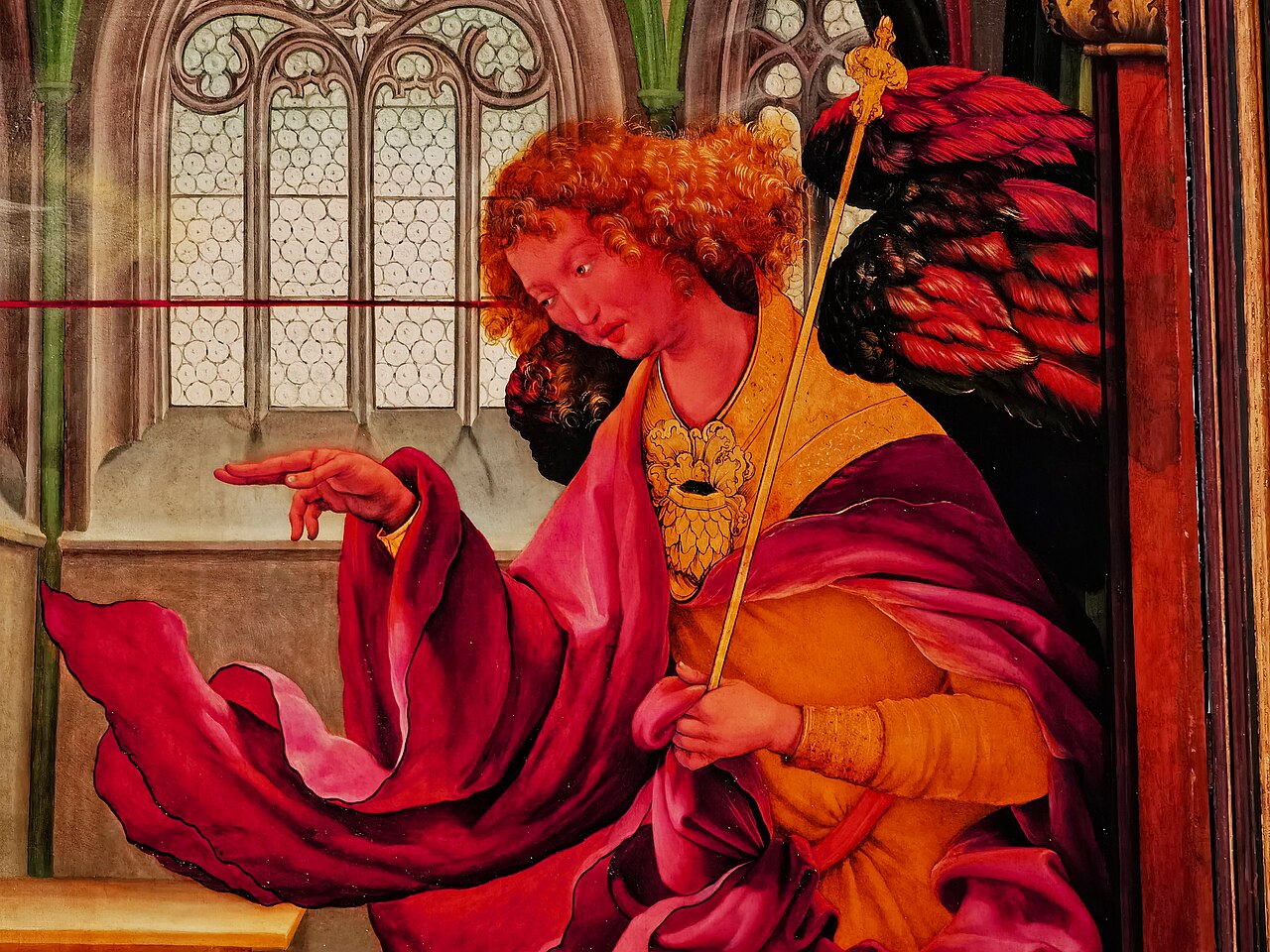
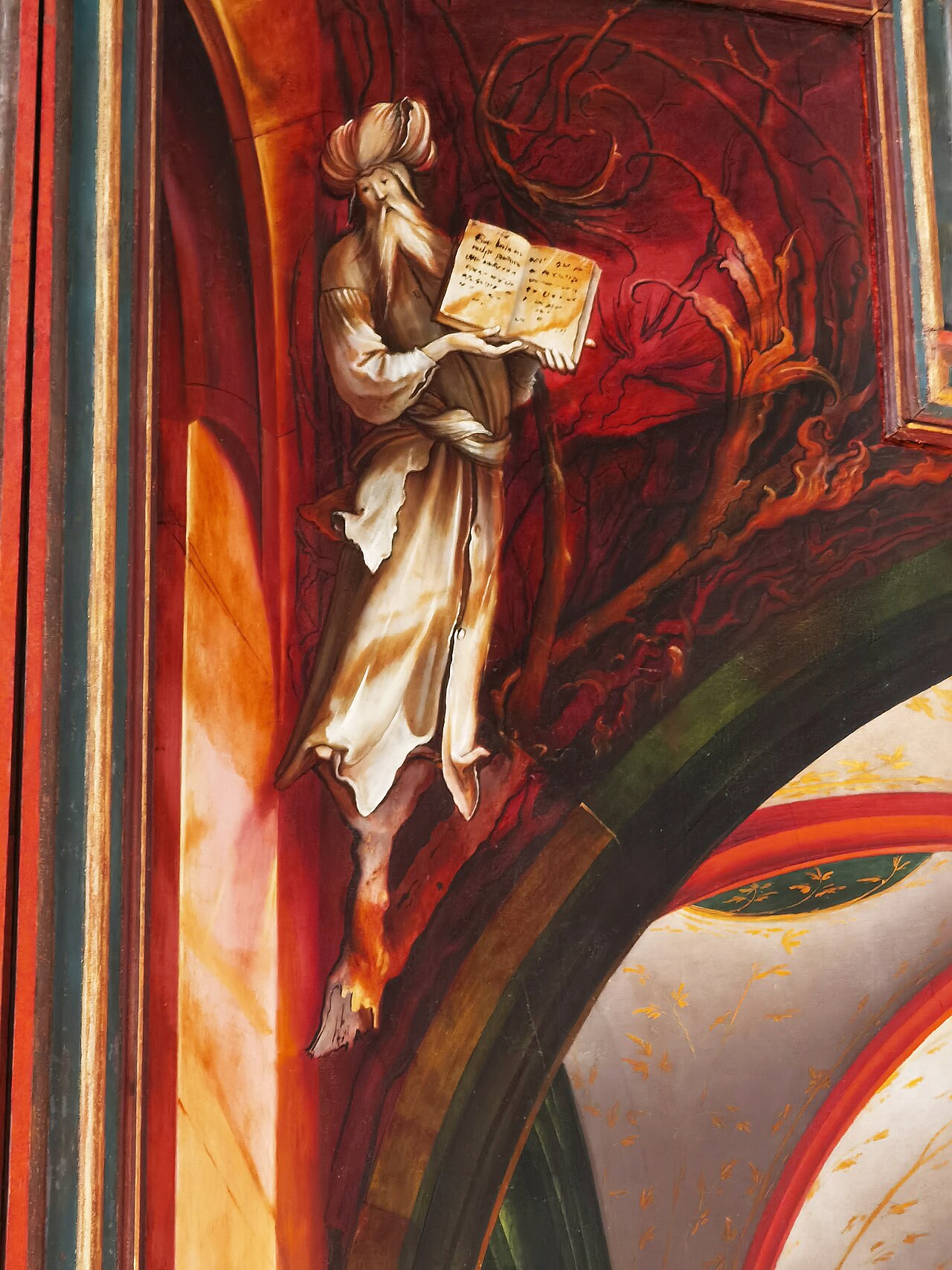
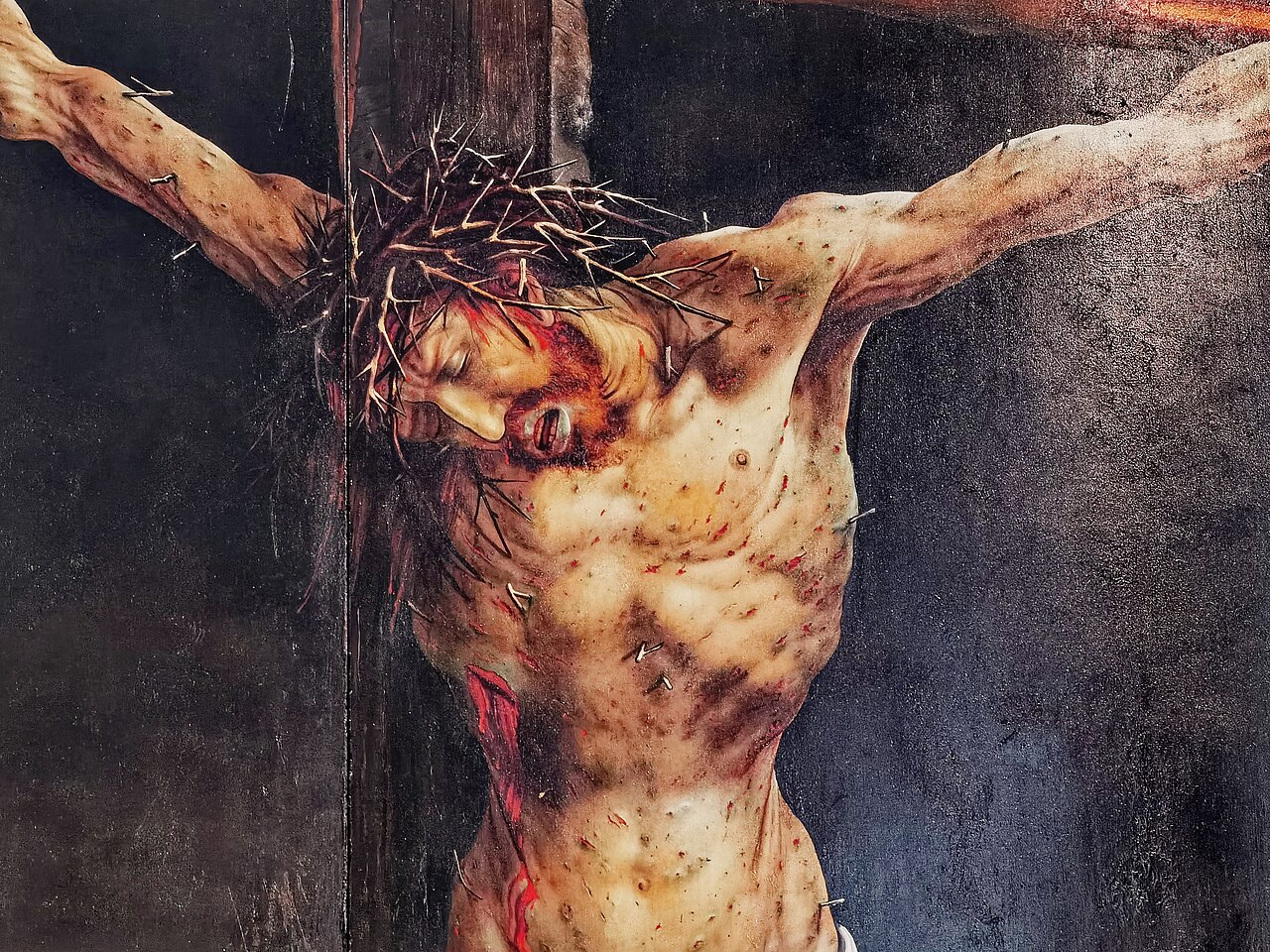
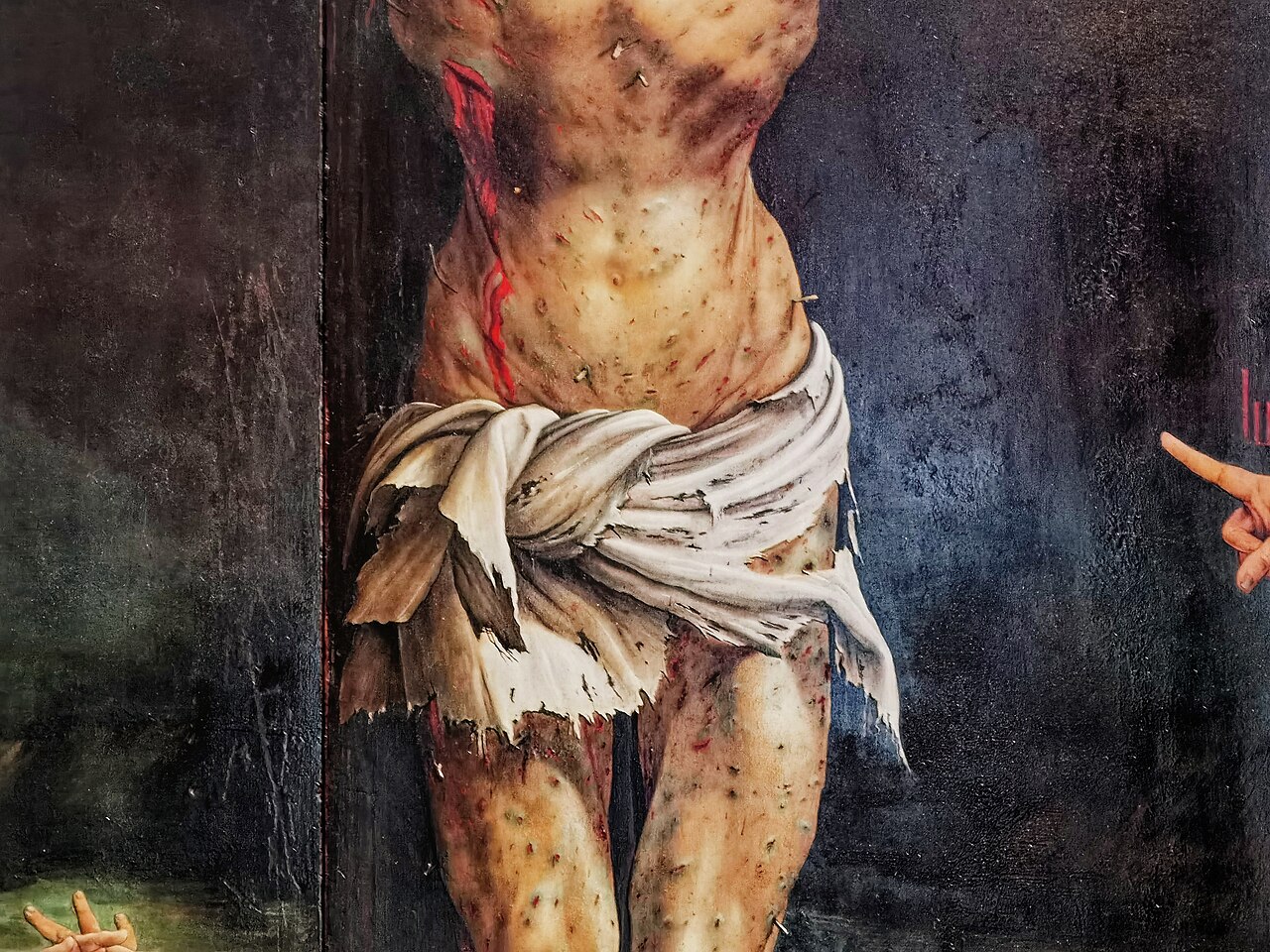
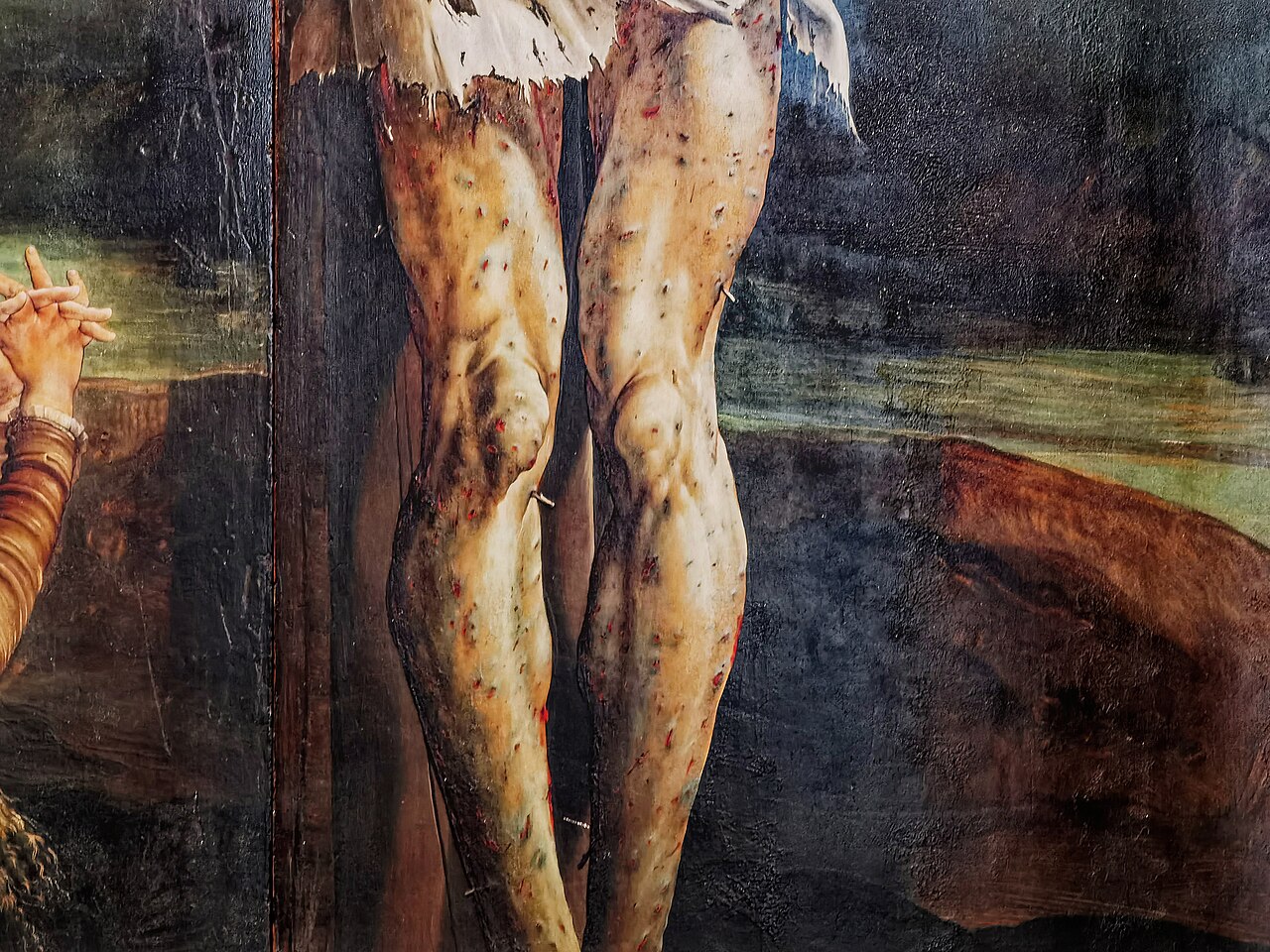
Its nine images on twelve panels are arranged on double wings to present three views according to the season or occasion. As well as being by far his greatest surviving work, the altarpiece contains most of his surviving painting by surface area, being 2.65 metres high and over 5 metres wide at its fullest extent. His other works are in Germany, except for a small Crucifixion in Washington and another in Basel, Switzerland. Dürer's work was destroyed by fire and survives only in copies, but the wings have survived. Altogether four somber and awe-filled Crucifixions survive. The visionary character of his work, with its expressive colour and line, is in stark contrast to Dürer's works. His paintings are known for their dramatic forms, vivid colors, and depiction of light. Joris-Karl Huysmans promoted his art enthusiastically in both novels and journalism. Elias Canetti wrote his novel Auto-da-Fé surrounded by reproductions of the Isenheim altarpiece. He is commemorated as an artist and saint by the Lutheran Church on April 6, along with Dürer and Cranach.
Did You Know?
- Grünewald's largest and most famous work is the Isenheim Altarpiece, created c. 1512 to 1516.
- Only ten paintings—including several polyptychs—and thirty-five drawings by Grünewald survive, all religious.
- Grünewald was obscure until the late nineteenth century, when many of his paintings were attributed to Albrecht Dürer.
- The Isenheim Altarpiece is 2.65 metres high and over 5 metres wide at its fullest extent.
- Grünewald is commemorated as an artist and saint by the Lutheran Church on April 6, along with Dürer and Cranach.
The Painter's Standing
Matthias Grünewald occupies a distinguished position in the annals of European art, recognized as a highly regarded painter of the German Renaissance. This designation places him among the most celebrated visual artists to emerge from the cultural flowering that swept through the German-speaking lands during that era. The qualifier 'highly regarded' signals that his reputation extends well beyond mere historical curiosity; he is acknowledged as a figure of genuine artistic merit whose work has sustained critical admiration across centuries. As a painter, he worked in the visual medium that defined the Renaissance's most celebrated achievements, contributing to a tradition that elevated the craft of image-making into a form of high cultural expression. His association with the German Renaissance specifically anchors him within a particular national and temporal artistic movement, distinguishing his contributions from those of Italian or Flemish contemporaries. The fact that he is singled out in a list of notable bearers of the name Matthias as a painter—rather than a musician, poet, or actor—underscores the particular weight his artistic achievements carry in the broader cultural record.
The Name and Its Origins
The first name Matthias, which Grünewald carried, traces its roots to the Greek word Ματθαίος, a form that is in origin similar to the name Matthew. This etymological lineage connects the painter to a naming tradition with deep biblical and classical antecedents, one that has been transmitted and adapted across a remarkable breadth of languages and cultures. The name appears in numerous cognate forms—Mathias and Matthias in German, Mathias in French, Matías in Spanish, Mattias in Swedish and Danish, Mátyás in Hungarian, and Maciej in Polish, among many others spanning from Amharic to Japanese. For Grünewald, the German form Matthias or Mathias would have been the natural rendering of this ancient name within his linguistic and cultural milieu. The name's widespread adoption across continents and faiths speaks to a universal resonance that predates and transcends any single artistic tradition, lending a quiet universality to the identity of a man whose specific contributions were rooted in the particular soil of the German Renaissance.
Among the Arts
In the constellation of notable individuals who bear the name Matthias, Grünewald is catalogued specifically under the arts, a category that gathers a diverse array of creative practitioners. He stands alongside figures such as the Swiss composer Matthias Bamert, the Scottish poet Matthias Barr, the German guitarist Matthias Jabs, the Icelandic poet Matthías Jochumsson, the German film art director Matthias Lechner, the German audio engineer and electronic music producer Matthias Menck, the German cellist Matthias Moosdorf, the Belgian actor Matthias Schoenaerts, the North German Baroque musician Matthias Weckmann, and the Swiss artist Matthias Pfenninger, among others. This grouping reveals that the name Matthias has been a vessel for extraordinary creative expression across multiple disciplines—music, poetry, visual art, film, and performance. Grünewald's placement among these peers, as a painter of the German Renaissance, highlights the breadth of artistic achievement associated with this name and situates his contribution within a wider tapestry of human creativity that spans centuries and national boundaries.
A Name Across the World
The name that identifies Matthias Grünewald as a painter of the German Renaissance is far from a local or isolated curiosity. It exists in cognate forms across an extraordinary range of languages: from the Amharic ማትያስ and the Assyrian ܡܲܬܿܝܵܐ to the Japanese マティアス and the Korean 마티아스, from the Catalan Mateu and the Georgian Mate to the Welsh Mathew and the Turkish Mattiya. In the German-speaking world specifically, both Mathias and Matthias are recognized forms, the latter being the one attached to the Renaissance painter. The name's presence in the religious, political, sporting, and scientific spheres—evidenced by figures ranging from the Holy Roman Emperor Matthias to the botanist Matthias Jakob Schleiden, co-founder of cell theory—demonstrates its deep penetration into the fabric of human civilization. For Grünewald, this name carried the weight of centuries of cultural association, a linguistic inheritance as old as the Greek from which it was originally drawn, anchoring his identity in a tradition that stretches from the ancient Mediterranean to the modern world.
Gallery
Frequently Asked Questions
Who is Matthias Grünewald?
Matthias Grünewald (c. 1470–1528), also called Mathis Gothart Nithart, was a German painter of the Renaissance era who devoted his entire output to religious subject matter. He is best remembered for producing one of the most emotionally raw altarpieces of the early sixteenth century.
What is Matthias Grünewald's most famous work?
The Isenheim Altarpiece, painted roughly between 1512 and 1516, is his largest and most celebrated composition. It was commissioned for a hospital chapel and is renowned for its unflinching, visceral portrayals of suffering and redemption.
How many paintings and drawings by Grünewald survive today?
Only ten paintings, several of them polyptychs, and thirty-five drawings are known, and every one of them depicts a religious theme. No secular works have been securely attributed to him.
Why was Matthias Grünewald overlooked for so many centuries?
After his death in 1528 his name largely faded from memory, and numerous canvases were long misidentified as works by Albrecht Dürer. It was not until the late nineteenth century that scholars began correctly separating his hand from Dürer's.
What artistic style did Grünewald work in?
Rather than embracing the balanced classicism that defined much Renaissance painting, he carried forward the expressive, emotionally charged traditions of late medieval Central European art well into the 1500s. This made him a stylistic counterpart to Dürer, who embodied the emerging classical ideals.
More in Renaissance And Baroque Masters 1-22
Spotted an error? Know more?
This is a living reference — every entry is fact-audited, and reader corrections feed straight into our audit queue. Suggest an edit · See this site's audit record