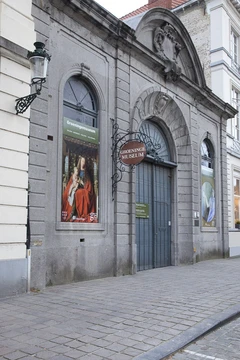
Robert Campin
Early Netherlandish painter, often identified with the Master of Flémalle.

Robert Campin · Public domain
Robert Campin (c. 1378 in Valenciennes, France – 26 April 1444 in Tournai, then Bishopric, currently Belgium), now usually identified with the Master of Flémalle, was a master painter who, along with Jan van Eyck, initiated the development of early Netherlandish painting, a key development in the early Northern Renaissance. While his existence is well documented, no works can be certainly identified as his through signature or contemporary documentation, and the attribution of a group of paintings to him has been controversial for decades.
- died
- 1444, Tournai (then Bishopric, now Belgium)
Lore & Background
Campin first appears in Tournai archives of 1405–06 as a free master of the guild of goldsmiths and painters. In 1408 he purchased the house he had been leasing since 1406 near Tournai Cathedral, and in 1410 he bought full citizenship. By 1419 his fame had spread enough that he led a large and profitable workshop. He owned several houses, purchased city bonds, and invested in mortgages. Between 1423 and 1429, when the city government was dominated by the guilds, Campin served as deputy dean of the guild in 1423–24 and 1425, and in 1427 he represented the guild on the city council. Between 1426 and 1428, he employed four apprentices: Rogelet de le Pasture, Haquin de Blandain, Jaquelotte Daret, and Willemet. After the restoration of the oligarchy, Campin was brought to court and ordered to make a pilgrimage to Saint-Gilles and pay a fine. Campin was married to Ysabel de Stocquain (Elisabeth van Stokkem), and the couple was childless. He had an affair with Laurence Polette, for which he was prosecuted in 1432 and sentenced to banishment for a year. Margaret of Burgundy, wife of the Count of Holland and sister of John the Fearless, Duke of Burgundy, intervened on his behalf, and the penalty was reduced to a fine. Shortly after the verdict, his apprentices Rogier van der Weyden and Jacques Daret were accepted as masters into the guild of painters. The dated Werl Altarpiece (1438) shows he continued to work. He died in his adopted city of Tournai in 1444.
Reader's Guide
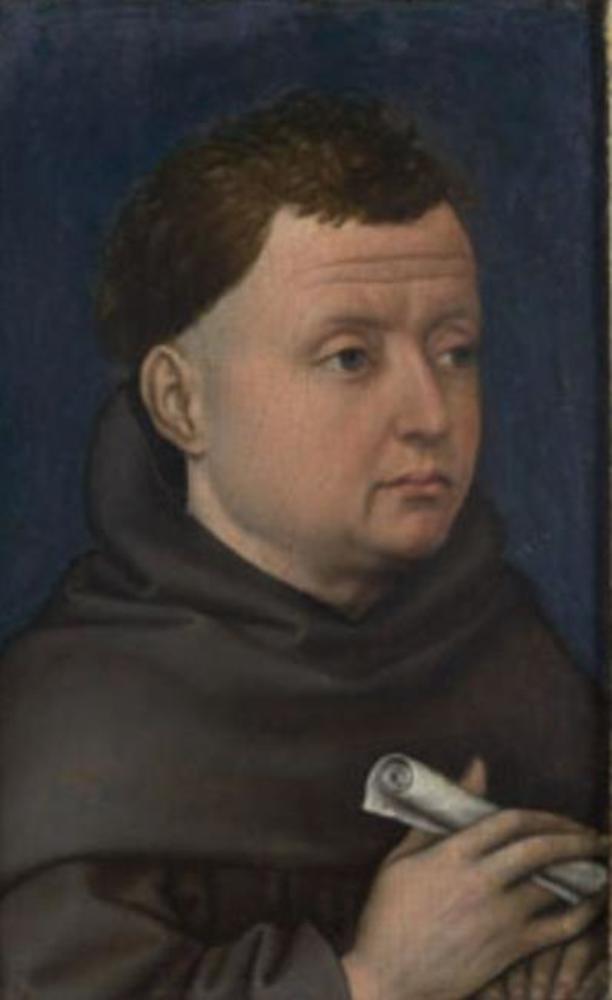
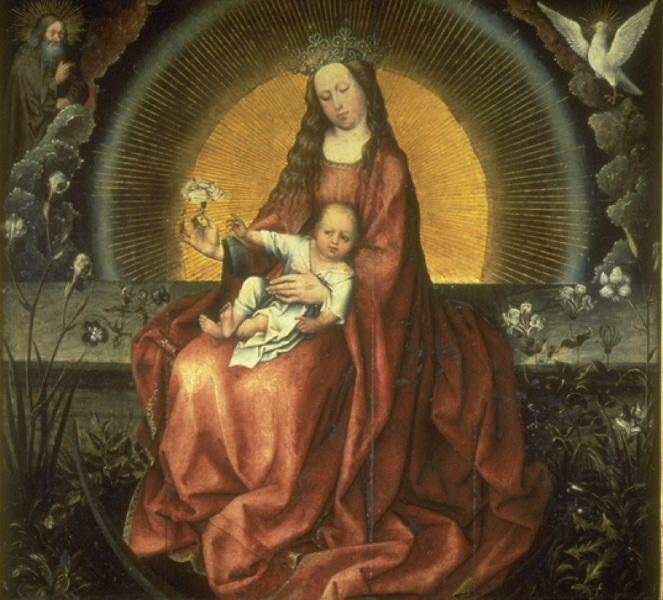
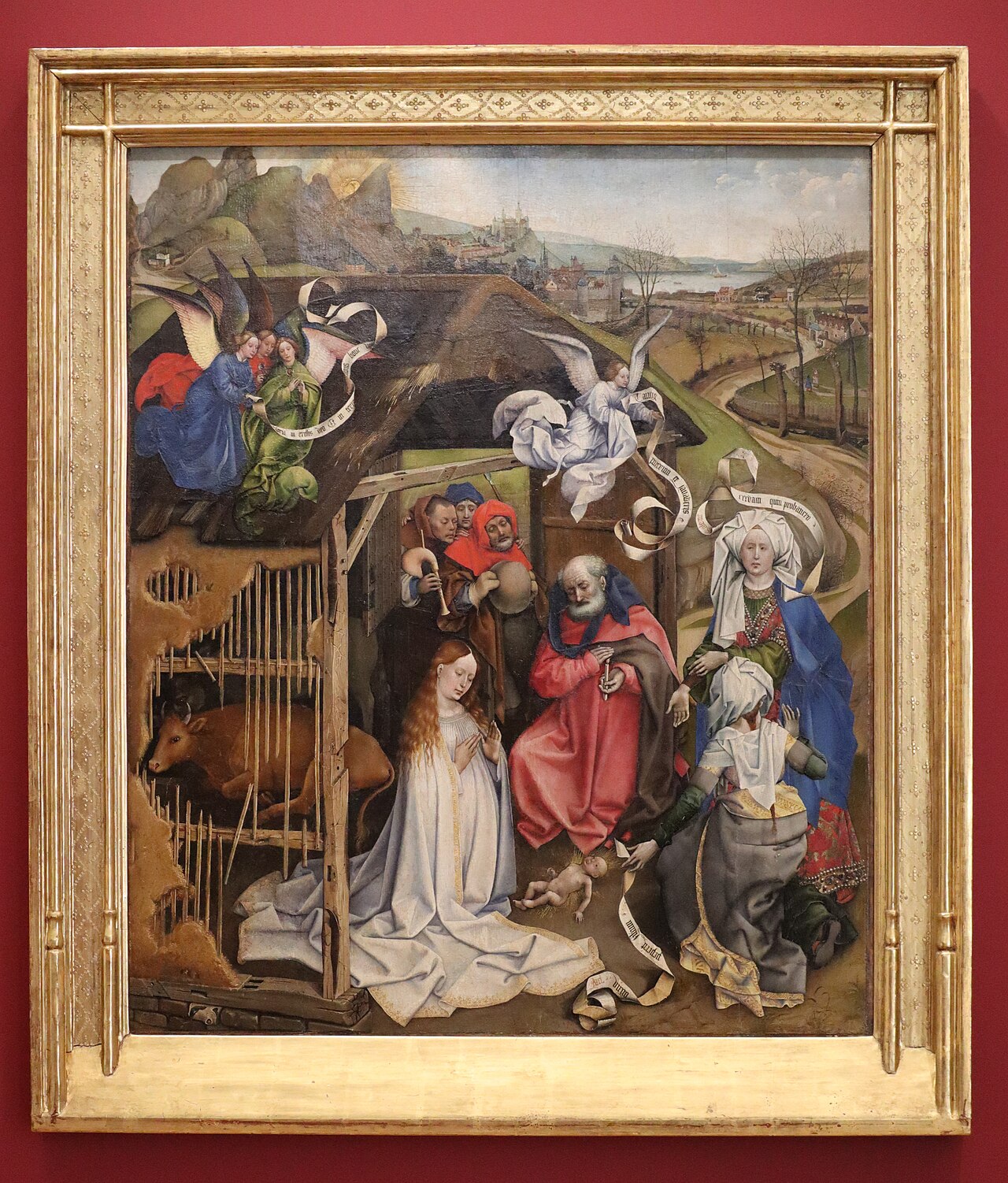
Robert Campin is significant as a foundational figure of early Netherlandish painting, alongside Jan van Eyck. His work shows the influence of International Gothic artists such as the Limbourg brothers (1385–1416) and Melchior Broederlam (c. 1350 – c. 1409), but displays greater realistic observation than any earlier artists, achieved through innovations in the use of oil paints. He was one of the first to experiment with oil-based colours instead of egg-based tempera, using the new technique to model light and shade in compositions of complex perspectives. His best-known work is the Mérode Altarpiece of c. 1425–28. The identification of Campin with the Master of Flémalle—named after three religious panels said to come from a monastery in Flémalle—has been debated for decades. Some scholars argue that the Flémalle panels were painted by Rogier van der Weyden in his twenties. The tightest definition of Campin's own hand includes only the Flémalle panels, a Nativity at Dijon, a Crucified Thief fragment in Frankfurt, two portraits in London (of around 1430), and perhaps the Seilern Triptych, excluding many works usually attributed to him. Campin taught both Rogier van der Weyden and Jacques Daret, and his workshop produced numerous commissions for individuals, guilds, and civic authorities. He was a contemporary of Jan van Eyck, and they are recorded as meeting in 1427.
Did You Know?
- Campin was prosecuted in 1432 for an affair with Laurence Polette and sentenced to banishment for a year, but Margaret of Burgundy intervened and the penalty was reduced to a fine.
- He employed four apprentices between 1426 and 1428: Rogelet de le Pasture, Haquin de Blandain, Jaquelotte Daret, and Willemet.
- Campin owned several houses, purchased city bonds, and invested in mortgages.
- He was one of the first painters to experiment with oil-based colours instead of egg-based tempera.
- The Werl Altarpiece of 1438 shows Campin continued to work after his legal troubles.
Among the Pioneers of Oil
His contribution to this foundational moment was part of a wider flowering of Flemish painting that began in the early fifteenth century and would continue, in evolving forms, well into the seventeenth century. Campin worked during what scholars broadly call the Early Netherlandish period, a phase stretching to roughly 1520 in which the entire Low Countries region—encompassing the County of Flanders, the Tournaisis, and the Duchy of Brabant—was typically treated as a single artistic sphere, especially in English-language scholarship.
Roots in the Late Gothic
The artistic foundations of Robert Campin's work trace directly back to the miniature painting tradition of the late Gothic period. This lineage is a defining characteristic shared among the Flemish Primitives, whose innovations in oil technique grew out of the detailed, small-scale decorative work that had been central to Gothic manuscript illumination and panel production. Campin's practice thus represents a bridge between the intimate, ornamental world of late Gothic miniature art and the larger, more ambitious painted works that came to define the early fifteenth-century Flemish scene. His position within this tradition is significant because it connects his output to a broader cultural moment in which the Low Countries were producing art of extraordinary refinement and technical ambition.
Patronage and the Burgundian Court
The court of the Duchy of Burgundy served as a crucial source of patronage for Robert Campin and his fellow Flemish Primitives. This institutional support was vital in sustaining the high level of artistic production that characterized early fifteenth-century Flemish painting and gave painters like Campin the resources to develop and refine their techniques, particularly their pioneering work with oil medium. Beyond the immediate benefits of courtly commissions, the broader ecosystem of Flemish painting attracted promising young artists from other countries, who were then invited to take up positions at foreign courts. This network of patronage and mobility gave Flemish painters a Europe-wide influence that extended well beyond the County of Flanders and its neighboring territories. Campin's work, situated within this web of support and cross-border exchange, contributed to a reputation for Flemish artistic excellence that would endure for centuries, establishing standards that later movements from the Renaissance through the Baroque era would measure themselves against.
A Legacy Across Centuries
Robert Campin's place in art history is inseparable from the long arc of Flemish painting that unfolded after his time. Campin's early innovations in oil technique and his deep roots in late Gothic miniature painting remain the bedrock upon which this entire tradition was built.
Gallery
Frequently Asked Questions
Who is Robert Campin?
Robert Campin (c. 1378–1444) was a painter based in Tournai, in present-day Belgium, who is credited with helping launch the early Netherlandish painting tradition alongside Jan van Eyck.
What is the 'Master of Flémalle' controversy?
Campin is commonly equated with the anonymous painter called the Master of Flémalle, yet no extant work bears his signature or a firm documentary link that settles the identification. Scholars have debated this attribution for decades without full consensus.
What paintings are most commonly attributed to Robert Campin?
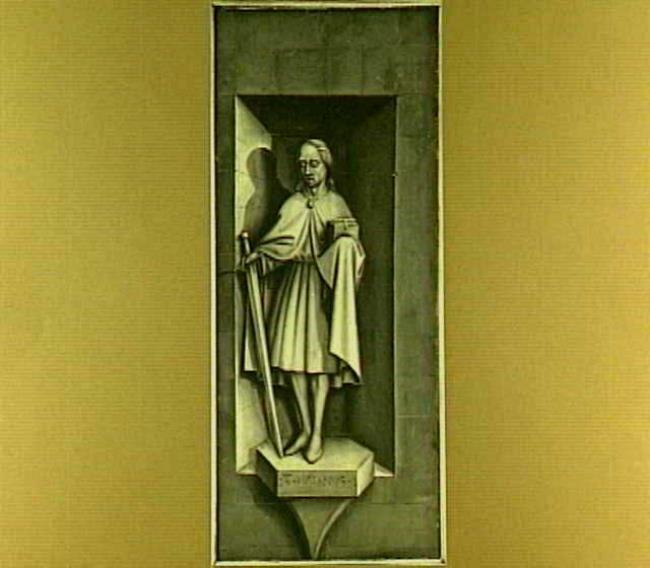
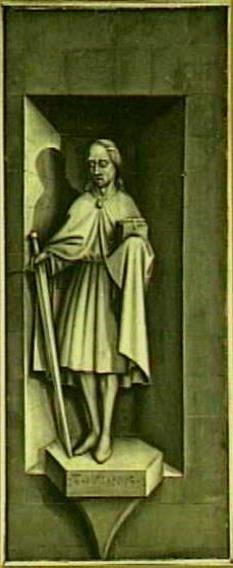
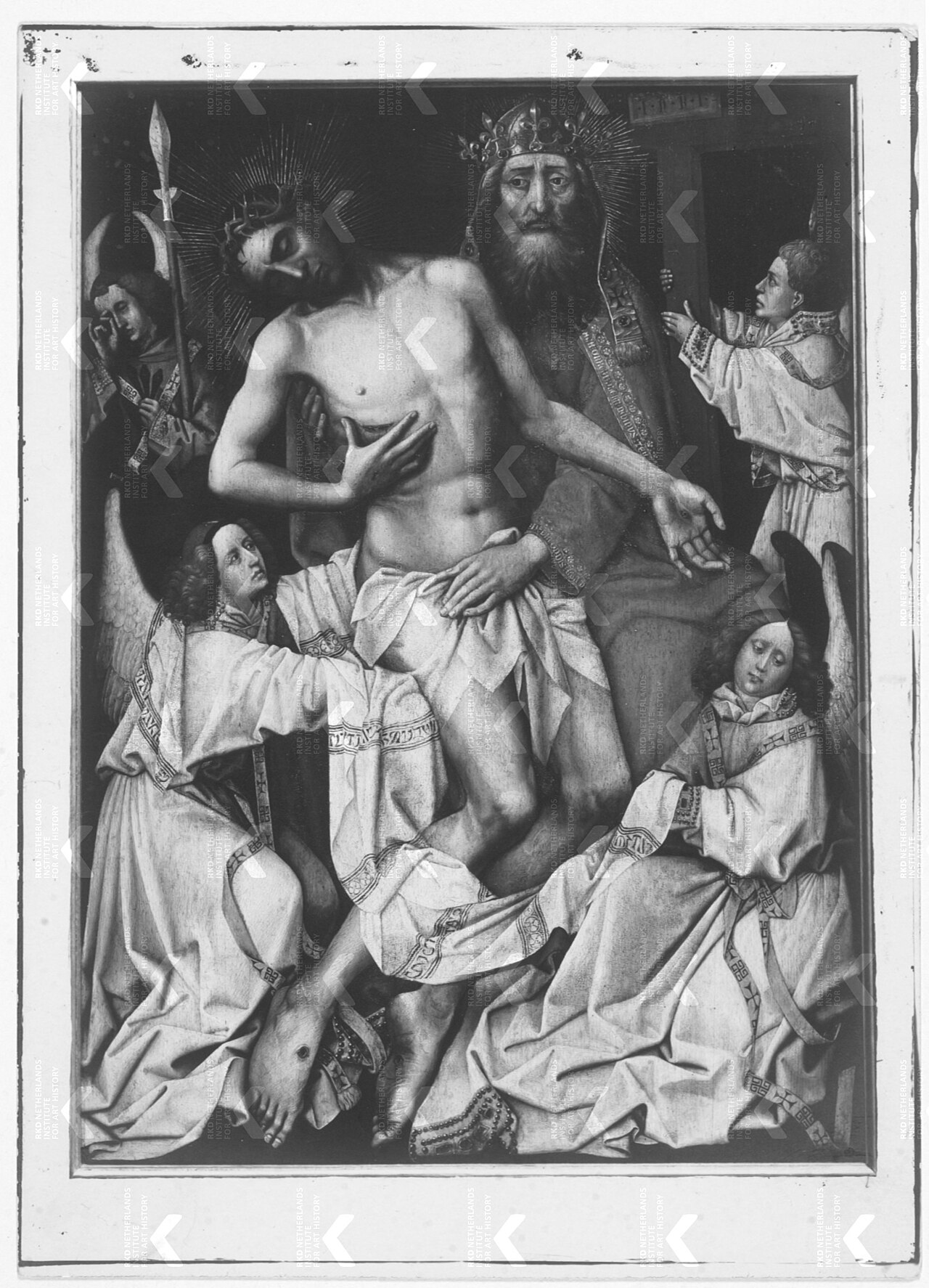
Works frequently linked to him include the Mérode Altarpiece, the Tanners' Madonna, and the Diptych of Joffrey de Crèvecoeur, all showing the meticulous oil technique and devotional intimacy characteristic of early Netherlandish art.
How does Campin's career compare to Jan van Eyck's?
Though both are treated as co-founders of the Netherlandish school, Campin worked in Tournai while van Eyck was active in Bruges, and their styles, while overlapping, developed along somewhat independent lines.
Why does Robert Campin matter to the broader Renaissance story?
His experiments with oil glazing, spatial depth, and naturalistic detail helped lay the technical groundwork that Northern Renaissance painters would build on for the next two centuries.
More in Renaissance And Baroque Masters 1-22
Spotted an error? Know more?
This is a living reference — every entry is fact-audited, and reader corrections feed straight into our audit queue. Suggest an edit · See this site's audit record